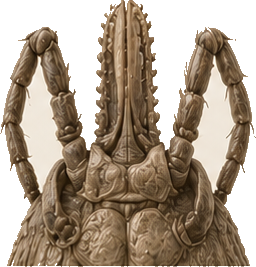
Tick identification
Which tick
bit you?
Knowing the species tells you the risk — and takes the fear down a notch. Here are the three you’re most likely to meet, at their real size, with what each one can and can’t carry.
Actual size
Smaller than you think.
Every stage, next to a dime. The poppy-seed-sized nymph causes most Lyme cases precisely because it’s so easy to miss.


The Lyme carrier
Blacklegged (deer) tick
Ixodes scapularis
Small and dark, with a solid reddish-brown body and no markings. The nymph — the size of a poppy seed — is the one that gets people, because it’s almost impossible to see.
Size. Adult ≈ a sesame seed · nymph ≈ a poppy seed
Where it’s found
What it can carry
This is the tick behind Lyme. If a deer tick was attached to you and it’s been under three days since you removed it, you’re inside the 72-hour window where a single preventive dose can stop Lyme before it starts.

Know it by
Lone star tick
Amblyomma americanum
The female has one unmistakable white dot in the center of her back. Rounder and more aggressive than a deer tick — it will actively come toward a host.
Size. Adult ≈ a sesame-to-apple-seed · nymph is smaller
Where it’s found
What it can carry
The lone star tick does not carry Lyme — a common and important point of confusion. It has its own risks, including the alpha-gal red-meat allergy, so it’s still worth knowing when one bites you.

Know it by
American dog tick
Dermacentor variabilis
Noticeably larger, brown with ornate off-white or cream mottling on its back. Easier to spot than the others — see it beside them in the size chart.
Size. Adult ≈ a watermelon seed — the biggest of the three
Where it’s found
What it can carry
Does not carry Lyme. It’s a vector of Rocky Mountain spotted fever and tularemia — uncommon but serious, so a dog-tick bite followed by fever and a rash deserves prompt in-person care.
Not sure, or it’s already off?
When in doubt, start there.
If you can’t tell which tick it was, that’s fine — the intake asks a few simple questions and a physician reads it the same day. And if you still have the tick, the field guide shows how to remove and keep it safely.